The first hour of a road trip goes beautifully. Your baby is watching the world through the window, the playlist is playing, and everything seems to be going according to plan.
Then another hour passes.
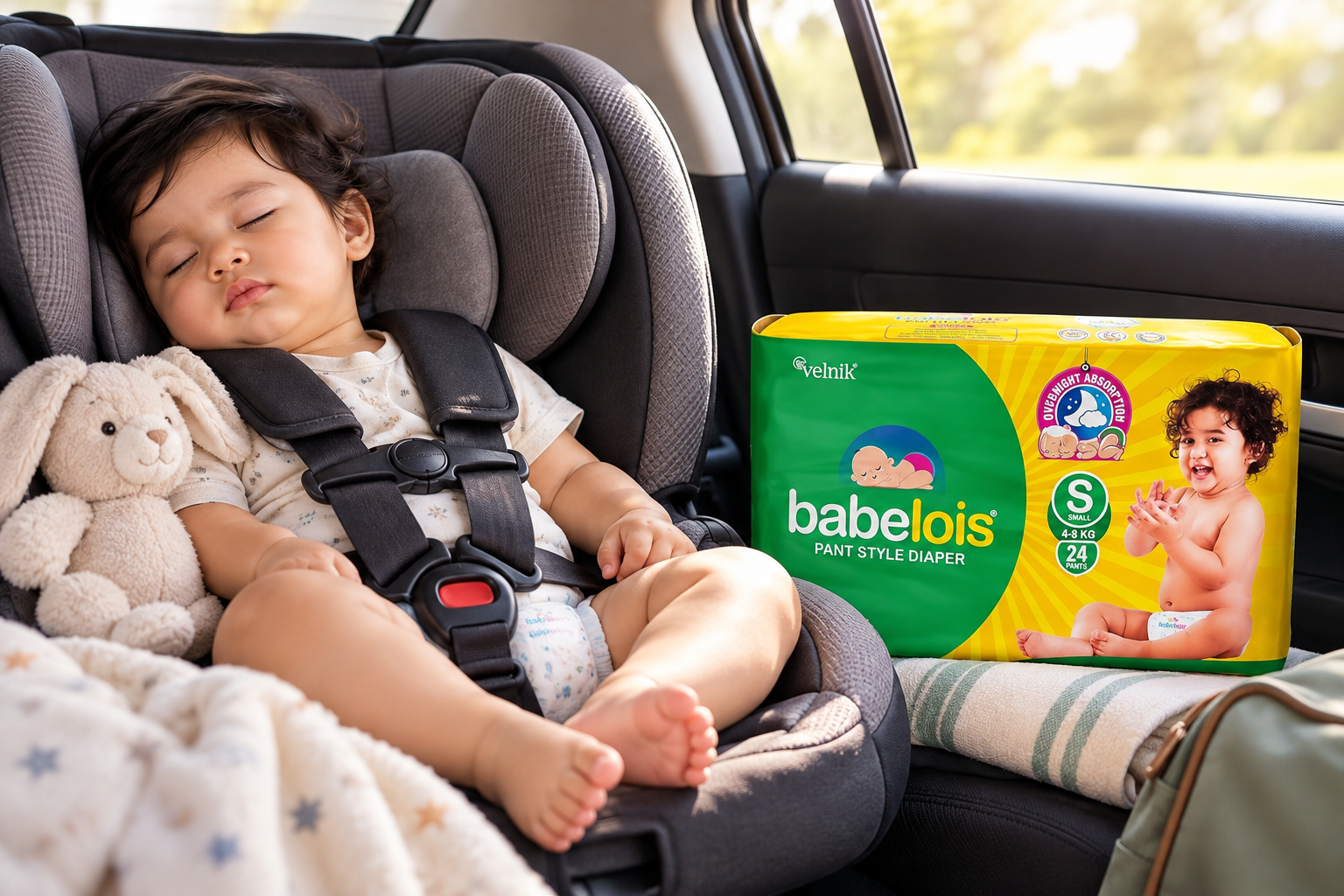
Your baby is still buckled into the car seat, the diaper has been absorbing moisture, and you’re wondering whether everything is still comfortable.
Here’s something interesting: a diaper doesn’t simply fill up like a tiny water balloon. Its inner layers work together to absorb liquid, distribute it and hold it inside. But as the journey continues, fit, warmth and changing opportunities become just as important.
So, what actually happens inside that diaper while the miles roll by?
The First Few Minutes: Where Does the Liquid Go?
When your baby urinates, the liquid passes through the diaper’s inner surface and moves towards its absorbent core.
Most disposable diapers have several layers, each with a different job:
- The inner layer allows liquid to pass through while helping keep the surface feeling relatively dry.
- The transfer layer helps distribute liquid through the absorbent material.
- The absorbent core contains materials such as cellulose fibres and superabsorbent polymers that take in and retain moisture.
- The outer layer helps prevent liquid from escaping onto your baby’s clothes.
Superabsorbent polymers are particularly clever. When they absorb liquid, they swell and form a gel-like material that holds the moisture inside the diaper.
This is why a diaper doesn’t simply become a pool of liquid after one wetting. Its absorbent materials are designed to hold moisture within the core.
But there’s a limit to how much liquid a diaper can retain. Once it becomes fuller, changing it promptly becomes increasingly important.
An Hour Later: Why Does the Diaper Feel Different?
Imagine stopping at a service station and checking your baby’s diaper. It feels heavier and bulkier than it did when you left home.
That’s expected. As the absorbent material takes in liquid, it swells, changing the diaper’s weight and shape.
Now consider your baby’s position. In a car seat, the hips are bent and the thighs rest differently than when your baby is lying flat. A diaper that’s already bulky may sit differently against the body, particularly if the fit wasn’t quite right to begin with.
This doesn’t mean sitting in a car seat automatically causes leaks. However, bunching, poor positioning or gaps around the legs can make a difference.
If you’re using pants style diapers for babies, check that the waistband and leg openings fit comfortably before the journey. The pull-on design can make changes convenient, but it still needs to fit your baby’s body correctly.
A diaper should feel comfortable when your baby is seated—not just when they’re lying down on the changing mat.
The Warmth Factor: What’s Happening Against Your Baby’s Skin?
A long car ride can mean warm surroundings, several layers of clothing and fewer opportunities to change your baby’s position. That makes skin comfort worth considering alongside absorbency.
Although a diaper is designed to retain liquid, moisture, warmth and friction can still contribute to irritation. A very full diaper or one that remains wet or soiled for too long may make the diaper area less comfortable.
To help your baby stay comfortable:
- Change wet or soiled diapers promptly.
- Choose comfortable clothing appropriate for the temperature.
- Check for persistent redness or irritation when changing your baby.
- Make sure the diaper isn’t fastened too tightly.
If your baby develops a rash that persists or worsens, seek advice from a healthcare professional.
And remember, fussiness during a drive isn’t necessarily a diaper problem. Your baby may be hungry, tired, too warm or simply ready for a break.
Absorbency helps manage moisture, but it can’t replace regular changes and a comfortable fit.
Can a Diaper Prevent Every Road-Trip Leak?
You’re still 40 minutes from your destination when you notice a damp patch on your baby’s clothes. Suddenly, the next rest stop can’t come soon enough.
Before blaming the diaper, consider where the leak happened.
If moisture escaped around the legs, check whether the leg gathers were positioned correctly and whether the diaper fits securely. If the diaper was very full, consider whether it needed changing sooner.
When comparing leak proof diapers, remember that no diaper can guarantee zero leaks in every situation. Even a well-designed product can leak if it doesn’t fit properly, becomes too full or is positioned incorrectly.
Before setting off, check that the waistband sits comfortably and the leg gathers are in their intended position. For longer trips, pack spare diapers, wipes and a change of clothes somewhere easy to reach.
One leak doesn’t necessarily mean you’ve chosen the wrong product. But if it keeps happening, reviewing the fit, absorbency and changing routine can help you understand what needs to change.
Does a Long Drive Change Which Diaper You Should Choose?
Not necessarily. Your baby doesn’t automatically need a special diaper just because you’re travelling.
The more useful question is whether the diaper you already use fits properly, manages moisture effectively and suits your baby’s stage.
Pant style diapers may be convenient for parents who find pull-on changes easier, particularly as babies become more active. Tabbed diapers can also work well for travel. Neither style is automatically better for long journeys; correct fit, absorbency and ease of changing matter more than the design name.
For younger babies, the priorities can be different. When choosing diapers for newborn baby, follow the recommended weight range and check that the front doesn’t rub against the healing umbilical stump. Some newborn designs have a lowered or shaped front to help avoid contact.
Whatever style you choose, plan for changes rather than relying on the diaper to last for a predetermined number of hours.
The Car-Seat Rule Parents Should Never Ignore
There’s one road-trip detail that matters more than the diaper brand: your baby’s safety in the car seat.
Never loosen the harness to make room for a fuller diaper or thicker clothing.
The harness must be fitted according to the car-seat manufacturer’s instructions. Bulky coats and padded snowsuits can interfere with harness fit, so avoid placing them beneath the harness unless the manufacturer specifically permits them.
For longer journeys, plan safe stops where you can take your baby out of the car seat, check their needs and change them if necessary. Never attempt a diaper change while the vehicle is moving, and never leave your baby unattended in a parked car.
A diaper manages moisture. A car seat protects your baby during travel. Each has a different job, and neither should compromise the other.
Before You Start the Engine
A little preparation can make a long drive easier for everyone.
- Start with a fresh diaper if your baby needs one.
- Check the fit around the waist and legs.
- Keep spare diapers, wipes and a change of clothes within easy reach.
- Plan safe stops, particularly for longer journeys.
- Follow the car-seat manufacturer’s instructions for harness fit and clothing.
You don’t need to check the diaper every few minutes. Simply stay attentive to your baby’s needs and stop somewhere safe when a change is necessary.
The Journey Is Long. The Diaper Has a Job to Do.
Inside a disposable diaper, several layers work together to absorb, distribute and retain liquid. As the journey continues, the diaper may become fuller and bulkier, while fit and warmth can affect overall comfort.
Understanding what’s happening helps you prepare sensibly: choose a suitable fit, change your baby when needed, carry spare supplies and plan safe stops.
Because the goal isn’t to find a diaper that lasts forever without needing attention.
It’s to make the journey more comfortable for your baby—and a little less stressful for you.