One minute, your baby is sitting happily with a toy. The next, they’re crawling under the table, pulling themselves up against the sofa, and trying to reach something that was definitely not part of the plan.
Welcome to playtime.
For babies, moving around is how they explore the world. For parents, it can mean wondering whether the diaper is still sitting properly, whether the waistband is digging in, or whether that little leak will appear just when everyone is having fun.
Here’s what many parents don’t realise: a diaper can absorb moisture well and still be uncomfortable for an active baby if the fit, flexibility or leg openings aren’t right. Absorbency matters, of course—but it isn’t the only feature worth paying attention to.
Let’s look at what happens during those busy little adventures and which diaper details deserve more attention than they usually get.
1. The Real Test Begins When Your Baby Starts Moving
A diaper may seem perfectly comfortable when your baby is lying down. But crawling, kicking, squatting and standing put it through a very different test.
Every movement changes how the diaper sits against the body. The waistband stretches, the leg openings shift, and the fabric folds as your baby bends and twists.
If the fit is too loose, gaps may appear around the legs. If it’s too tight, the diaper may leave marks or restrict comfortable movement.
What to look for: A diaper that fits snugly around the waist and thighs without digging into the skin. Your baby should be able to move freely without the diaper constantly slipping, bunching or needing adjustment.
This is one reason parents often consider pants style diapers for babies as their little ones become more active. Their pull-on design can make dressing and changing easier, especially when a baby has discovered that staying still is entirely optional.
2. Absorbency Is Important—but Where the Moisture Goes Matters Too
Imagine your baby has been crawling around for an hour. They’ve had a feed, played with their favourite toys and managed to turn a quiet afternoon into a full workout.
Meanwhile, the diaper has been doing its own job.
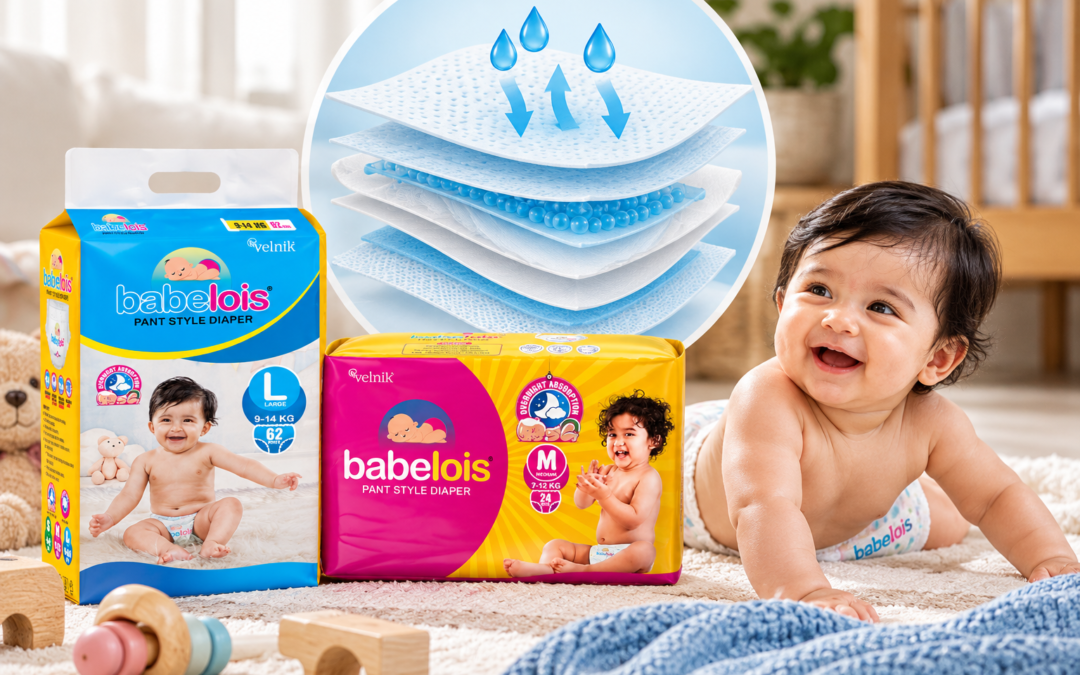
Disposable diapers typically contain layers that allow liquid to pass through the inner surface and move into an absorbent core. Materials such as superabsorbent polymers help retain moisture within that core.
But good absorbency isn’t simply about how much liquid a diaper can hold. How quickly moisture moves away from the skin and how evenly it spreads through the absorbent area also matter.
When a diaper becomes very full, it can feel heavier and bulkier. That extra bulk may affect how it sits during movement, making a comfortable fit even more important.
A practical tip for parents: check the diaper during regular changes rather than waiting for it to feel extremely heavy or assuming it can last for a fixed number of hours.
3. Those Tiny Leg Openings Deserve a Closer Look
Have you ever noticed how much babies move their legs during playtime? They kick, crawl, climb over cushions and bend their knees in every possible direction.
That’s why the leg area deserves more attention than it often receives.
The leg gathers help create a close fit around the thighs. If they’re tucked inward, folded incorrectly or sitting too loosely, liquid may escape through the gaps. A diaper that’s too small can also fit poorly, even if you fasten or pull it on correctly.
Before playtime, take a quick look at three things:
- Leg gathers: Check that they’re positioned correctly and not folded inward.
- Thigh fit: Look for obvious gaps, but make sure the diaper isn’t leaving deep marks.
- Waistband: It should sit comfortably without rolling down or digging into the skin.
When comparing leak proof diapers, remember that no diaper can guarantee zero leaks in every situation. Fit, absorbency, movement and how full the diaper becomes all influence how well it performs.
Sometimes the answer isn’t a different brand. It may simply be a better size or a more suitable fit.
4. Softness Isn’t Just a Nice Extra
Babies have delicate skin, and a diaper stays close to it throughout the day. During active play, the diaper may rub against the thighs, waist and groin as your baby moves.
That repeated contact makes softness and a comfortable fit more than just features on a product label.
Moisture, friction and prolonged contact with a wet or soiled diaper can contribute to irritation. A diaper that feels rough, bunches up or presses against the skin may add to your baby’s discomfort.
What can parents do?
- Choose a diaper that feels soft against the skin.
- Change wet or soiled diapers promptly.
- Avoid fastening the diaper too tightly.
- Check for persistent redness or marks during changes.
If a rash persists, worsens or causes significant discomfort, consult a healthcare professional.
And remember, a fussy baby isn’t always reacting to their diaper. Hunger, tiredness, heat and overstimulation can also turn playtime into a difficult moment.
5. Flexibility Can Make Changes Easier for Everyone
Some babies treat diaper changing like a wrestling match. They roll over, reach for the wipes, kick their legs or attempt to crawl away before you’ve finished.
This is where the design of a diaper can make a practical difference.
Pant style diapers pull on much like underwear, which can be convenient when a baby is wriggling or becoming more mobile. Depending on the product, the stretchy waistband may also help the diaper move with the body.
However, a pull-on design isn’t automatically the best option for every baby or every situation. Traditional tab-style diapers can also provide a good fit and may be easier for some parents to adjust, particularly with younger babies.
The right choice depends on your baby’s size, stage of development, skin comfort and your changing routine.
The goal isn’t to choose the trendiest diaper style. It’s to find one that fits properly and makes everyday care easier.
6. What About Newborns Who Aren’t Crawling Yet?
It’s easy to assume that diaper features only become important once babies start moving around. But comfort and fit matter from the very beginning.
When choosing diapers for newborn baby, focus on the recommended weight range, a gentle fit around the waist and thighs, and a design suited to your newborn’s needs.
Some newborn diapers feature a shaped or lowered front to help avoid rubbing against the healing umbilical stump. If your baby still has a healing stump, follow your healthcare professional’s advice and the diaper manufacturer’s instructions.
Newborns don’t need the same diaper features for the same reasons as crawling babies. For a newborn, gentle contact and an appropriate fit may be the priority. For an active baby, flexibility, secure leg openings and ease of changing may become more noticeable.
The important thing is to choose for your baby’s current stage—not simply their age on the packet.
7. The Features Worth Checking Before You Buy
Diaper packaging can make every feature sound essential. But rather than getting distracted by every claim, focus on what will make a difference in your baby’s everyday routine.
Here’s a simple checklist:
Comfortable fit: Does the diaper sit securely around the waist and thighs without digging in?
Reliable absorbency: Can it manage moisture effectively when used as directed, with regular changes?
Flexible design: Does it accommodate your baby’s usual movements without constantly bunching or slipping?
Skin-friendly feel: Does the material feel comfortable, and does your baby show signs of irritation?
Easy changing: Can you change the diaper safely and efficiently when your baby is wriggling?
Suitable sizing: Does the size match your baby’s weight and body shape, rather than just their age?
No single feature tells the whole story. A diaper with impressive absorbency may still be a poor choice if it doesn’t fit your baby properly.
8. A Small Playtime Routine That Can Prevent Big Disruptions
You don’t need to interrupt every game to inspect your baby’s diaper. A few simple habits can help you stay prepared without turning playtime into a checklist.
Before a longer play session, check whether your baby needs a fresh diaper. During regular changes, look for signs of poor fit, irritation or repeated leakage. Keep spare diapers and wipes nearby so you’re not searching for supplies at the last minute.
If leaks happen repeatedly, check the size, waistband and leg gathers, and consider whether the diaper is becoming too full between changes.
Most importantly, let your baby move. Crawling, rolling, standing and exploring are important parts of development. A well-fitting diaper should support everyday movement—not become something you have to keep correcting.
The Best Diaper Feature? The One That Works for Your Baby
It’s tempting to judge a diaper by one headline feature, whether that’s absorbency, softness or a promise of leak protection. But real life is more complicated than a product label.
During playtime, fit, flexibility, moisture management and skin comfort work together. When one of these falls short, your baby may become uncomfortable, or you may find yourself dealing with repeated adjustments and unexpected leaks.
So, the next time you choose a diaper, think beyond how much liquid it can hold. Think about the little legs kicking, the knees bending, the crawling adventures and the changes that happen between breakfast and bedtime.
Because the best diaper isn’t just one that stays dry. It’s one that fits comfortably into the way your baby moves, plays and discovers the world.