There was a time when changing your baby’s diaper was one of the easiest things you did all day. You would lay your baby down, clean them, put on a fresh diaper and pick them up again. The whole thing could be over before they even had time to complain.
Then your baby learned how to roll.
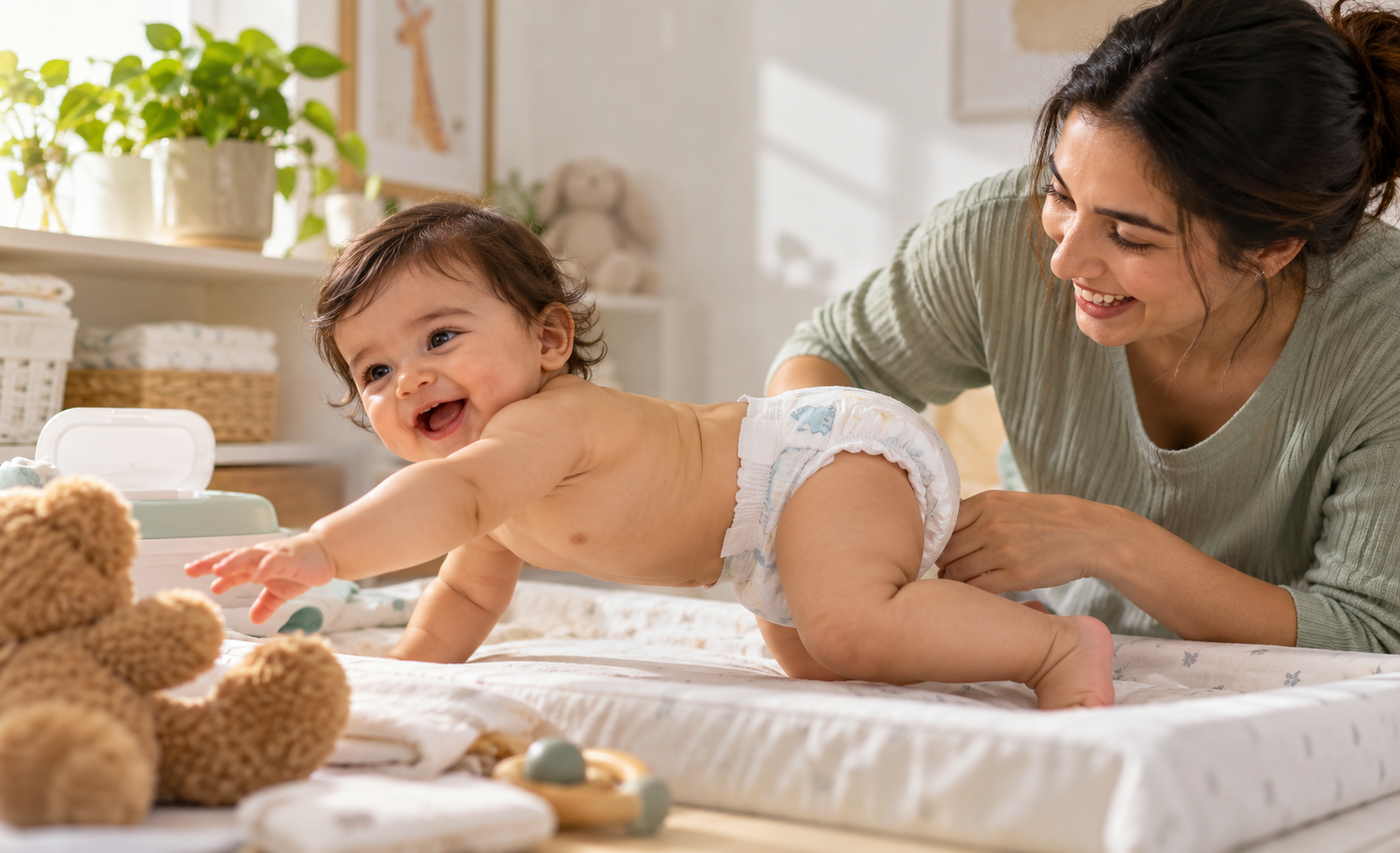
Suddenly, you put them on the changing mat and they turn to the side. You bring out a fresh diaper and they reach for it. You try to put their legs through their clothes and they start kicking. Before you know it, your baby is halfway across the mat, looking very pleased with their escape.
If this sounds familiar, don’t worry. Your baby hasn’t suddenly become difficult. They have simply discovered that they can move, and exploring the world is much more exciting than lying still for a diaper change.
As babies learn to roll, crawl and eventually stand, diaper changes need to change with them. A few simple adjustments can make the process easier, quicker and much less stressful.
In This Article
- Why Do Babies Suddenly Stop Sitting Still?
- What Happens When Your Baby Learns to Roll?
- Why Does Crawling Make Diaper Changes Harder?
- How Can You Keep Your Baby Interested During a Change?
- Does Your Diaper Need to Change With Your Baby?
- How Can You Make Diaper Changes Easier?
- What If Your Baby Keeps Trying to Get Away?
- Can Diaper Changes Become Easier Again?
1. Why Do Babies Suddenly Stop Sitting Still?
Your baby hasn’t suddenly decided that diaper changes are their enemy. They have simply become more curious about everything around them.
When babies start learning new movements, they want to practise them whenever they get the chance. Rolling over becomes exciting. Reaching for things becomes exciting. Crawling across the floor becomes even more exciting.
So when you place your baby on the changing mat and expect them to lie still for a few minutes, they may have a very different plan.
They can see a toy nearby, hear something interesting or notice something across the room, and suddenly the diaper change is the least important thing happening.
This is why it helps to remember that your baby’s behaviour is part of their development. Instead of expecting them to stay as still as they did when they were younger, you can make small changes to the way you handle diaper time.
2. What Happens When Your Baby Learns to Roll?
The first time your baby rolls over, it is exciting. You probably celebrate it, take a picture and tell everyone about it.
A few days later, you may wonder why they have decided to practise this new skill every single time you change their diaper.
Once babies learn to roll, they quickly realise they can use this new movement to get somewhere. That means the changing mat can suddenly become an opportunity to turn over, look around or reach for something nearby.
The easiest way to deal with this is to prepare everything before you start. Keep the clean diaper, wipes and clothes close by so you don’t have to stop halfway through the change.
You can also give your baby something safe to look at or hold. A small toy or a familiar object can keep their attention for long enough to finish the change.
And remember to stay close. A baby who has started rolling can move much faster than you expect, so never leave them alone on a raised changing surface.
3. Why Does Crawling Make Diaper Changes Harder?
Rolling gives your baby an escape route.
Crawling gives them a destination.
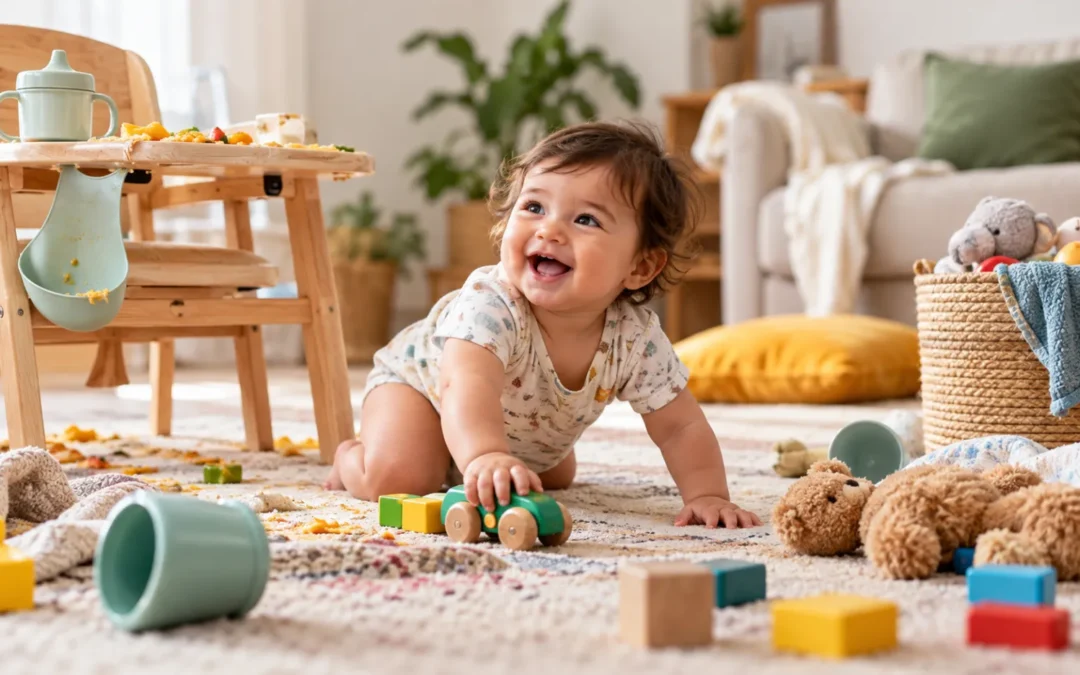
Once your baby can crawl, the moment you put them down for a diaper change may be the moment they decide to explore the other side of the room. The toy they ignored for the last hour suddenly becomes very important, and getting dressed seems to be standing directly between them and their next adventure.
At this stage, it can help to make the diaper change part of a familiar routine. Use the same simple words before you begin, keep everything ready and try to follow the same steps each time.
You can also talk to your baby while you change them. Tell them what you are doing or sing a song they recognise. This gives them something familiar to focus on while you finish the change.
They may still try to crawl away, of course. But when your baby knows what is happening, the process can become less frustrating for both of you.
4. How Can You Keep Your Baby Interested During a Change?
Sometimes the easiest way to get through a diaper change is to give your baby something more interesting to do.
It could be a favourite toy, a soft book or even a safe object that they don’t normally get to play with. Some babies enjoy listening to a song, while others simply want you to talk to them.
You don’t need to buy special toys just for diaper changes. In fact, babies often find ordinary things more interesting than the toys you carefully choose for them.
The important thing is to find something that keeps your baby’s attention for a few minutes.
As your baby gets older, you can also involve them in the routine. Ask them to hold the clean diaper or encourage them to lift their legs when you are getting them dressed. They may not understand everything you say, but giving them something to do can make them feel less like they are being forced to stay still.
A little distraction can turn a difficult diaper change into a much easier one.
5. Does Your Diaper Need to Change With Your Baby?
Your baby isn’t the only thing that changes as they become more active. Their diaper needs can change too.
A newborn who spends most of the day lying down has very different needs from a baby who is constantly rolling, crawling or standing. As your baby becomes more active, the diaper needs to stay comfortable and in place while they move.
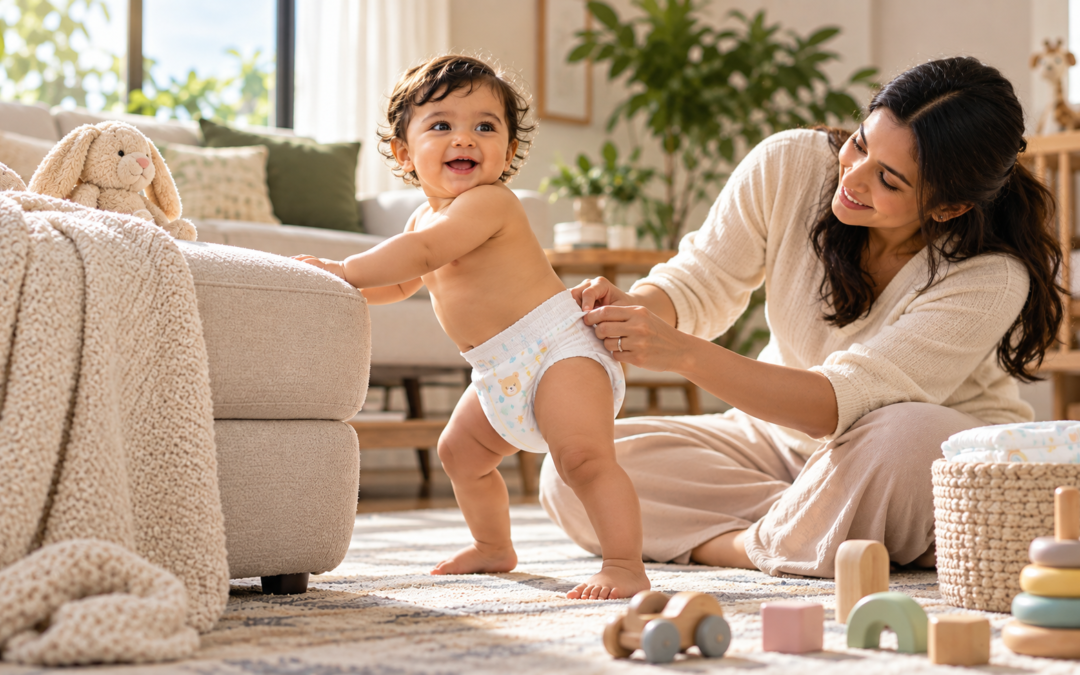
This is one reason some parents start considering pant style diapers when their baby becomes more mobile. The pull-on design can make it easier to get a fresh diaper on a baby who doesn’t want to stay still.
Of course, every baby is different. The right choice depends on their age, size, movement and comfort. The needs of a newborn looking for diapers for newborn baby are not the same as those of a crawling or walking baby.
Instead of sticking with the same type of diaper simply because it worked before, pay attention to what your baby needs now.
6. How Can You Make Diaper Changes Easier?
The easiest diaper change is usually the one you have prepared for.
Before you begin, keep everything you need within reach. Have the clean diaper ready, open the wipes and keep your baby’s clothes nearby. This means you won’t have to stop halfway through the change to look for something.
It also helps to keep the process simple. You don’t need to rush, but there is no reason to make a diaper change longer than it needs to be.
If your baby keeps moving, give them a toy or talk to them while you work. If they are learning to crawl, make sure the changing area is safe and never leave them alone on a raised surface.
The diaper itself matters too. If you notice frequent leaks when your baby is moving around, check whether the size and fit are still right. Leak proof diapers can help provide better protection against moisture escaping, but even a good diaper needs to fit your baby properly to work well.
Small changes like these can make a surprisingly big difference.
7. What If Your Baby Keeps Trying to Get Away?
Some babies simply refuse to stay still.
You put them down, and they roll. You bring them back, and they crawl. You pick up the clean diaper, and suddenly they are reaching for something on the floor.
Instead of turning every change into a struggle, try to work with their movement.
If your baby can safely stand with support, you may eventually find that some changes are easier when they are standing rather than lying down, depending on the type of diaper and the situation. For a quick change, keeping your baby engaged with a toy or talking to them can also help.
You can also give them small choices. Ask which toy they want or let them hold the clean diaper. These little choices may seem insignificant, but they can make the routine feel more interactive.
And if your baby crawls away immediately after you finish, don’t take it personally.
They probably just have somewhere very important to be.
8. Can Diaper Changes Become Easier Again?
Yes, although they may not look exactly like they did before.
As babies grow, they begin to understand familiar routines. They may start recognising that when you bring out the diaper, it is time to get changed. Eventually, some babies even start helping by lifting their legs, standing still for a moment or bringing you their diaper.
For parents with active little ones, pants style diapers for babies can also make the routine easier when a traditional diaper change has become difficult to manage.
There will still be days when your baby decides to move at exactly the wrong moment. That’s normal. The goal isn’t to make every diaper change perfectly calm.
It is to find a routine that works for your baby’s current stage.
What worked when your baby was a newborn may not work when they are crawling. And what works during the crawling stage may need to change again once they start walking.
Takeaway
Diaper changes become harder once babies start moving because they are no longer happy to simply lie still while you do everything for them. They have discovered rolling, crawling, reaching and exploring, and they naturally want to practise those new skills whenever they can.
Instead of trying to stop all that movement, make the routine easier to manage. Keep your supplies ready, give your baby something interesting to focus on, involve them when you can and make sure their diaper is comfortable and suited to their current stage.
Most importantly, don’t expect every diaper change to go perfectly.
Some days, your baby will lie still and let you finish.
Other days, you will be trying to put on a diaper while they are determined to crawl away.
And that’s okay.
Your baby is not making diaper changes difficult on purpose. They’re just growing, moving and discovering the world—one escape attempt at a time.